
Bangladesh Protest Death Toll Exceeds 100 Amid Dhaka Curfew
Protests have erupted in Dhaka and other Bangladeshi cities against a new policy reserving a portion of government jobs for specific groups

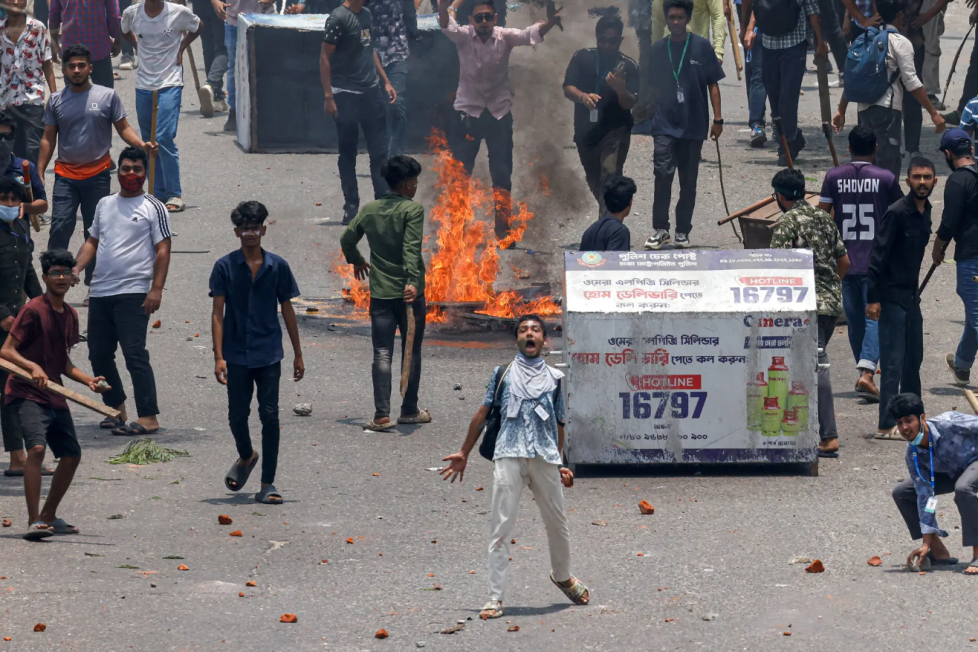
Protests have erupted in Dhaka and other Bangladeshi cities against a new policy reserving a portion of government jobs for specific groups
The Bangladesh protest death toll continues to rise as life came to a standstill on Saturday. A government-enforced curfew aimed to control violent clashes between student protesters and security forces. The typically congested streets of this city of 10 million were empty, with shops and businesses closed, and only military and paramilitary personnel visible on patrol. Despite these efforts, sporadic street battles continued into the evening, and severe internet restrictions remained in place since Thursday.
According to reports from hospitals and police, at least 110 people have been killed in the demonstrations over the past four days, marking the deadliest protests in Bangladesh in over a decade. The casualties include several police officers, with thousands more people injured. Mohammed Abir, a medical examiner at Dhaka Medical College Hospital, confirmed receiving 33 bodies on Friday evening alone.
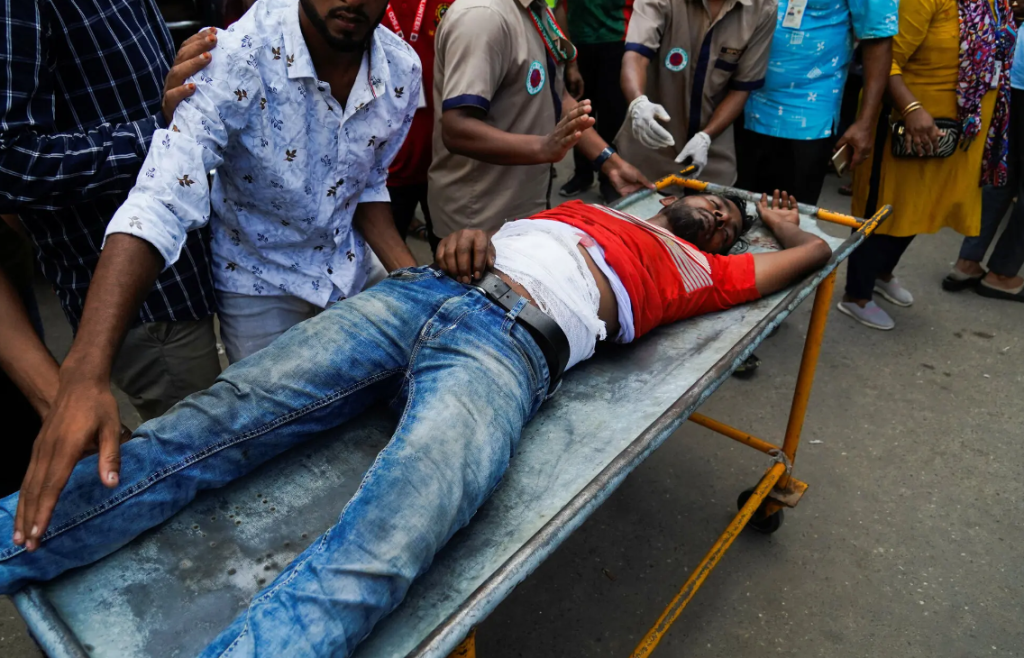
The U.N. human rights chief, Volker Türk, described the violence as “shocking and unacceptable,” calling for restraint and impartial investigations into the attacks against students. He expressed particular concern about the actions of the government’s paramilitary police units, known for their history of human rights violations.
The protests, which have spread to several major cities, were sparked by a new government policy that reserves a portion of civil service jobs for specific groups, including descendants of the nation’s freedom fighters. This quota system, seen as unfair by many, has ignited widespread anger against Prime Minister Sheikh Hasina’s administration, which has responded with increasingly harsh measures to suppress the unrest.
Student protest leaders met with government officials on Saturday to present their demands, which include overhauling the job quota system, the resignation of certain cabinet ministers, and immediate trials for those responsible for killing students. “The government must release arrested student protesters,” said student activist Abdullah Saleheen, vowing that the protests will continue until their demands are met.
Attempts to reach the Bangladeshi Foreign Ministry, Home Affairs Ministry, and the U.S. Embassy in Dhaka for comments on Saturday were unsuccessful. The U.S. Embassy issued an alert advising staff to shelter in place, describing the situation as “extremely volatile and unpredictable.” They reported the use of guns, tear gas, and other weapons near the embassy.
Earlier, the State Department had issued a travel advisory for Bangladesh, urging U.S. citizens to reconsider travel due to civil unrest in Dhaka.
On Friday, the protests escalated as demonstrators stormed a jail in the district of Narsingdi, northeast of the capital, freeing hundreds of inmates. Police stations were ignited as paramilitary and military forces deployed tear gas, rubber bullets, and smoke bombs to break up the crowds.
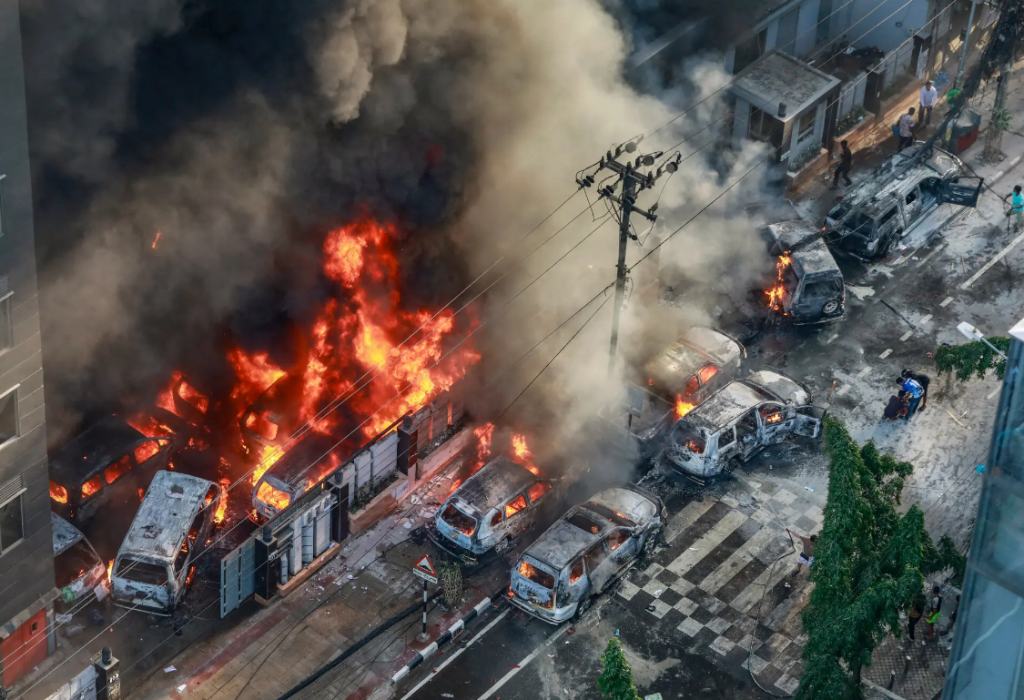
The government responded with a nationwide curfew, ordering everyone to stay home until 10 a.m. on Sunday, with a brief two-hour window on Saturday for essential movement. Internet services have been severely disrupted, leading to a near-total blackout affecting much of the country’s 170 million people. Banks have also reported operational disruptions.
Government officials claim that the internet slowdown is intended to curb misinformation, but digital rights groups argue that it could exacerbate the situation by limiting access to accurate information and increasing panic. The #KeepItOn coalition, comprising over 300 digital rights organizations, stressed the importance of maintaining open and secure internet access during such crises.
The Asia Internet Coalition also urged Bangladesh to consider the negative impact of these actions on its people and the country’s reputation as an investment destination.
In response to the unrest, several major textile companies, a key part of Bangladesh’s economy, announced they would close their factories on Sunday. Prime Minister Hasina has canceled a planned trip to Europe to address the crisis.


